Introduction

What Is Charge
Charge is a free, open, and generic table-top role-playing game.
It is free, and maintained by the Fari Community. Which means anyone is welcome to make a contribution to the rules of the game.
It is also open licensed. Which means you can use it for free. You can also make (and sell) your own games using Charge as the base framework.
Where to Buy

Dash
To get started as quickly as possible with Charge, checkout it’s condensed version: Dash, available for free on itch.io and on Keeper.
Charge SRD
For more details on how to design games using Charge, read the Charge SRD, also available on Keeper.
Credits
This work is based on Blades in the Dark (found at http://www.bladesinthedark.com/), product of One Seven Design, developed and authored by John Harper, and licensed for our use under the Creative Commons Attribution 3.0 Unported license (http://creativecommons.org/licenses/by/3.0/).
Contributing
One of the core parts of what makes this game unique is that it belongs to the community.
The game is free, released under an open game license, and welcomes contributions.
Some systems encourage game designers to develop their own games using their rules. Charge, on the other hand, encourages game designers to help make it grow.
What we mean by that is that you can:
- Suggest core rules updates
- Provide new Extras
- Help improve the quality and reachability of the game by proofreading or translating it etc.
If you contribute to this project in any way, your name will be added in the credits of the game. If you designed a specific extra for the game, your name will also be credited there.
While Charge accepts donations, those donations will be re-invested in the game directly by commissioning the creation of official art, paying for the editing, etc.
If you want to contribute to Charge, join the Fari Community Discord server or check-out the Charge Community Forums on Itch.
Now, let’s build something incredible, together.
Useful Links
- Licencing Information
- Charge Itch Page
- Charge SRD
- Fari’s Discord server
- Charge Community Forums
- Charge Cheatsheet
Thanks
Wanted to say a quick thank you to my friends who have helped me make this idea a reality from the very beginning.
- Alexandre L. Lescarbeau
- Béatrice Landry-Belleau
- François Genois
- Gabriel Lemire
- Jean-Loup Kahloun
- Wing Tak Wong
- Xavier Tétreault
Goals

There are thousands of great table-top role-playing games out there. Some are generic, like Charge, and others are made with a very specific setting in mind. In the latter, mechanics are often created to reinforce the setting.
Charge is generic, which means you get to pick the world and setting you want to play in. You could play in a Sci-Fi setting where new planets are still being discovered and terraformed every year, or on Earth during the British Industrial Revolution. You get to choose.
Because settings can differ greatly, Charge’s game mechanics were made with very specific goals in mind to help you create the story you want to tell.
The Idea Behind Charge
Here are some things that makes Charge special compared to other games you might have played before.
It’s easy to create characters for any settings.
——
Characters are easy to define, and still unique in their own way. Charge gives you a good framework to create characters for settings you want.
Charge does this by making characters shine using character details to define who they are and how they’re linked to the world. They have actions to highlight what they are good at, and talents to make them evolve in interesting ways.
It offers easy to tune dials and extras to have “grimmer” up to “bigger than life” adventures.
——
From a post-apocalyptic survival adventure where each bullet counts, to a grand space opera where the heroes always prevail, the mechanics are easily tuneable to reflect the kind of story you want to tell.
Either adjust the main difficulty setting of the game, or use one of the many extras provided to play the way you want to.
It is both a utility belt, and a toolbox.
——
Charge is a toolbox, because it has a set of mechanics to resolve narrative problems in multiple different ways. It is also a utility belt, since it gives you a default way to play that’s easy to pick-up and use.
Play it as is, or hack it as your want.
You will like this game if:
- you like narrative-focused systems
- you like that you can play in any setting
- you generally think that failure is more interesting than success
- you like when your character starts competent and gradually becomes more flexible
- you like playing Fate or Forged in the Dark games
Charge also brings new interesting ideas to the table, like a flexible progression framework and mechanics to make players want to interact with the world instead of staying still on the back-seat waiting for the best moment to act.
We hope you have fun with this, because we sure had fun writing it and playing it.
Now, let’s go over what you need to play Charge.
What You Need To Play
To play Charge, you need:
- Copies of the Charge RPG Character Sheet
- The Google Sheet version of the Charge RPG Character Sheet
- A pile of index cards or small pieces of paper to draw things on.
- A set of six-sided dice. At least 6 would be ideal.
- Between two and five friends to play with one acting as the Game Master.
The Game
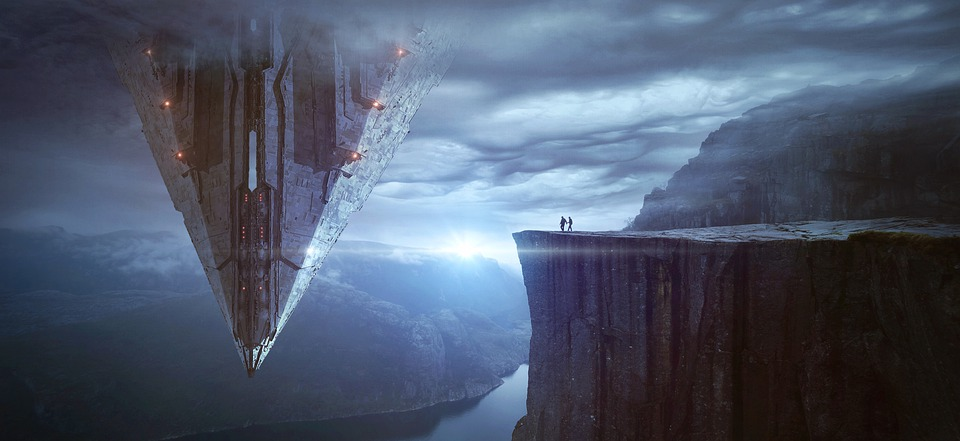
Charge is a generic table-top role-playing game. That means that you and your friends get together to tell an interactive story about a group of fictional characters you create. Those characters face obstacles and challenges, and you get to decide how they react. The world then changes based on what the characters do.
Game Master & Players
One person in the group needs to act as the Game Master, or GM. The GM is responsible for the world and the characters that live in it (those that aren’t directly played by the rest of the table). We call those characters “non-player characters”, or NPCs.
The rest of the group are Players. The players create a character that experiences compelling stories inside this world. We call those player characters, or PCs.
While the GM is usually the main person responsible for the way the world changes over time, everyone at the table is in charge of the story.
This isn’t a “GM versus Players” or “GM is god” kind of deal. If playing this game was like making a movie, the GM would be the director and all the players would be writers.
Everyone at the table contributes to make the story successful and captivating.
Game Structure
Everything inside Charge is collaborative.
You choose a setting together, you create your characters together, and you make that world evolve together.
Each session is made of scenes, like in a movie. Each scene plays out as a bunch of back-and-forth between the GM and the players. The GM describes what the scene is like, the players tell the GM what they do, and the GM makes the world react to those actions depending on the outcomes of certain dice rolls.
Each time you and your friends meet to play Charge is a session which can last between 1 and 4 hours, or even more. The amount of time each session takes depends on a lot of factors.
Each group can play very differently. Some might take their time while others might rush into things head-on, but it also depends on everyone’s availability.
During sessions, tension rises during scenes, and the players encounter narrative unknowns. To decide what happens during those moments, the group rolls dice because they want to be on the edge of their seats. They want to be surprised by where the story takes them next.
Before we look at how to create the players’ characters, we need to talk about making a safe environment for everyone at the table.
Safety at the Table
Safety Tools
If at any point during the game creation process, or when playing a scene, something doesn’t click with someone at the table, the game needs to be paused and things need to be aligned and discussed so that everyone is on the same page.
One way the GM can help make the table safer for everyone is by using safety tools like the X-Card by John Stavropoulos, or Beau’s Script Change RPG Toolbox.
This is super important and should not be taken lightly. Everyone at the table should feel safe and comfortable.
If you don’t feel safe at a table, it is totally OK to quit and find another group of people to play with. Don’t feel bad, and more importantly, respect yourself.
RPG Etiquette
Remember to be empathetic of people’s schedules and responsibilities. Some people have kids, pets, jobs, and other things that make scheduling sessions very hard. Show up on time and take the amount of gameplay time that you can get.
Then, patiently wait until the next session. And while you are waiting, remember and praise the awesome moments that happened in the last session.